




Our strong Industrial Development and Service exposure reflects in providing training on Embedded system Development. The training is totally based on Work and Practice methodology with all concepts, starting from Processor Architecture to Device Driver Development on Real time Hardware.
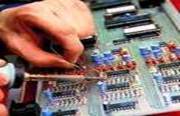 |
At low level itself, eg., in 8051, trainees are trained to write (both in ASM and ‘C’) and test programs on real hardware for
|
Either designed by them or with the Hardware Development boards available with us. It will be same on each step upto Device Driver and BSP. The Trainees compulsorily to carry out their project in BSP and Device driver. It fits them immediately to engage in Company’s project.
The training includes
- Advanced C
- Linux basics and Linux internals programming
- Data structures and logic analysis
- Micro-controllers (8051 and PIC)
- Embedded OS programming on ARM7,ARM9 and Real Time concepts (x86)
- Linux device drivers and BSP (ARM)
Grading
- Final Exam (20%)
- Project work (50%)
- Milestones: absolute deadlines for demonstrating some capability. These demonstrations must be done in group sizes of no larger than 2. Points will be lost for failure to meet a deadline.
- Widgets: specific project (of your design) that incorporates what we have been learning in class in some creative way. Groups of any size may work together on a widget. Points will be granted based on the difficulty and creativity of the widget (and split evenly between the group members). Individuals should be demonstrating widgets every 1-2 weeks.
- A small number of homework assignments and pop quizzes (20%)
- Participation: class (5%) and lab (5%)
You are expected to attend class regularly, read the assigned reading before class, and participate in class discussions. The course will be graded on a curve.
 Top |
Kits
Macrotech have extensive range of development kits both for Industrial and Academic purpose
Basic ARM Starter kit based on NXP (Philips) LPC 21XX SERIES:
The Starter Kit for NXP (Philips) LPC2129 contains all the necessary hardware and software and allows you to design, develop, integrate and test your applications:
- LPC2129 development board
- JTAG debugger Printer port connector
LPC2129 Development Board
|
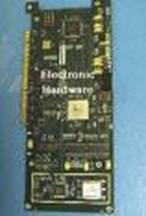 |
Embedded RTOS Trainer Kit: The low cost Embedded RTOS trainer kit explores the features of Uclinux with ARM7TDMI Core |
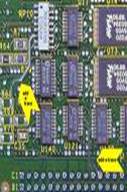 |
ARM7TDMI based embedded development platform with its on-board 4MB Flash and SDRAM ranging from 2MB supports embedded Linux based application development. It can be a starting point for an embedded engineer to start their development Embedded OS based application development. The board therefore comes pre loaded with Linux 2.6 kernel and thus offers an excellent platform for low-cost, low-power coupled with high computing power for complex embedded application development. It include integrated peripherals Ethernet, CAN and Serial port ensures a high degree of flexibility for embedded applications across domains. The kit have the documentation along with on board peripherals BSP, Device driver for the devices incorporated , memory management etc.
| Top |